
Call 07532 729053 | BPCA Member | Registered CPD Professional
Rat Control in Plymouth
Professional rat control for homes, landlords and businesses throughout Plymouth.
Finding rats in or around your property can be alarming, but simply controlling the rats currently visible doesn't always resolve the underlying problem.
KingPest Control & Wildlife Management Ltd provides professional rat control in Plymouth, combining appropriate treatment with investigation into where rats are active, how they may be accessing the property and what conditions could be allowing the problem to continue.
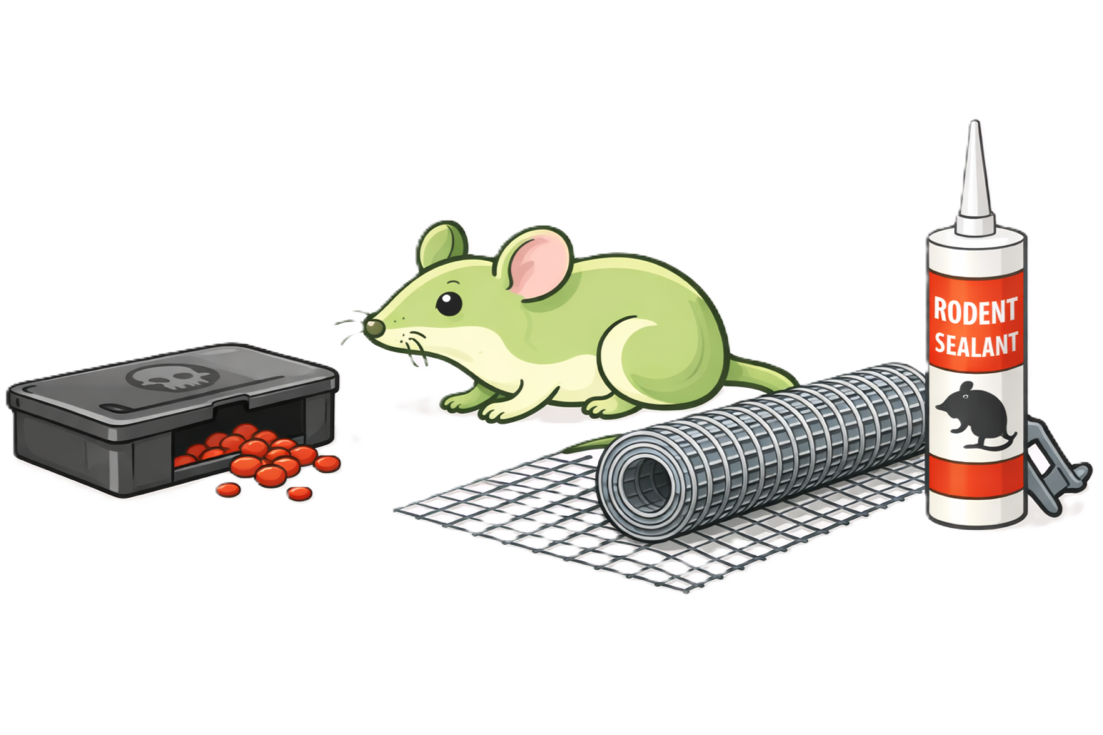
Depending on the circumstances, our approach can include inspection, trapping, professional rodenticide use where appropriate, monitoring, investigation of potential entry routes and practical proofing recommendations.
✓ Professional Rat Control
✓ Homes & Businesses
✓ Rat Entry-Point Investigation
✓ Drainage Problems Considered
✓ Proofing Advice
✓ BPCA Member
✓ Fully Insured
Professional Rat Pest Control in Plymouth
Rats are highly adaptable animals capable of living alongside people while remaining largely hidden.
A property may have established rat activity before occupants actually see one.
They can travel through:
Drainage systems
Wall cavities
Floor voids
Loft spaces
Service ducts
Gardens
Commercial yards
Adjoining properties
Once inside a building, rats can contaminate surfaces and stored products while also damaging property through gnawing.
Professional rat control should therefore consider more than simply where a rat was last seen.
KingPest investigates the available evidence to develop an appropriate treatment strategy for the individual property.
Signs You May Have Rats
Common signs of rat activity include:
Rat droppings
Scratching or movement noises
Gnawed materials
Damaged food packaging
Burrows
Grease marks
Tracks or footprints
Disturbed insulation
Unusual smells
Damage around bins or stored food
Sightings of live rats
Rats are often most active when properties are quiet, meaning noises during the evening or night can sometimes be the first indication of a problem.
However, scratching sounds alone don't confirm rats.
Mice, squirrels, birds and other animals can produce similar noises depending on the location.
Correct identification should therefore come before treatment.
How Are Rats Getting Into My House?
This is one of the most important questions when investigating an infestation.
Rats can exploit relatively small structural weaknesses and may access properties through areas that aren't immediately obvious.
Potential entry routes include:
Gaps around pipes
Utility penetrations
Damaged air bricks
Broken vents
Door gaps
Damaged masonry
Roofline defects
Wall cavities
Extensions
Adjoining properties
Underground drainage
The point where you hear or see the rat isn't necessarily where it entered.
Rats can travel considerable distances through concealed building voids.
KingPest therefore looks for physical evidence and potential routes rather than simply placing treatment where the customer last saw activity.
Rats Coming Through Drains
Rats are excellent swimmers and are well adapted to sewer environments.
Drainage systems can provide extensive underground routes between different areas.
Where a drainage system contains a defect, rats may sometimes gain access to parts of a building that should normally be isolated from the sewer.
Potential problems can include:
Damaged underground pipework
Broken drain connections
Redundant drainage
Defective inspection chambers
Poorly sealed pipe penetrations
Drainage alterations
Defects associated with extensions
Drain-related activity may sometimes appear around:
Kitchens
Bathrooms
Utility rooms
Ground-floor voids
Extensions
Soil-pipe locations
Not every rat infestation comes from a drain.
However, where rats repeatedly return despite treatment and no convincing above-ground entry route can be identified, drainage should be considered as a potential source.
Where the evidence suggests a drainage problem, further investigation may be recommended.
Why Do Rats Keep Coming Back?
Repeated rat infestations can indicate that treatment has addressed the animals but not the underlying vulnerability.
Potential reasons include:
An unidentified entry point
Drainage defects
Rats moving from neighbouring properties
Accessible food
Poorly secured waste
Bird feeding
Structural defects
External harbourage
Nearby established rat populations
This is why KingPest places emphasis on investigation and prevention alongside control.
Where possible, we aim to understand why the property is experiencing rat activity rather than assuming every infestation has the same cause.
Rats in the Loft
Scratching or movement within a loft can sometimes indicate rat activity.
Rats don't necessarily need an obvious opening in the roof to reach a loft.
Potential routes include:
Wall cavities
Drainpipes
Climbing vegetation
Extensions
Adjoining structures
Damaged soffits
Roofline defects
Internal building voids
Signs may include:
Droppings
Gnawed materials
Disturbed insulation
Tracks
Nesting material
Noises during quieter periods
An inspection can help determine whether rats are responsible and identify likely movement routes.
Rats Under Floorboards
Suspended floors and other concealed voids can provide rats with protected movement routes.
Activity beneath floors may be heard as scratching, movement or gnawing.
Potential sources can include:
Drainage
External air vents
Pipe penetrations
Structural openings
Adjoining properties
Because the activity is concealed, determining how rats reached the void can be more important than simply treating the location where noise is heard.
Rats Inside Wall Cavities
Wall cavities can allow rats to move vertically and horizontally through a building.
This can sometimes explain why activity is heard upstairs even though no obvious external opening exists near that part of the property.
Rats may enter at a lower level before travelling through the structure.
Identifying likely entry points therefore requires consideration of the building as a whole.
Rats in Gardens
Seeing a rat in a garden doesn't automatically mean rats are living inside the house.
Gardens can provide food, water and harbourage through:
Bird feeders
Compost
Pet food
Accessible rubbish
Dense vegetation
Decking
Sheds
Water sources
Neighbouring land
Burrows may develop beneath:
Sheds
Decking
Vegetation
Walls
Outbuildings
Where outdoor rat activity is persistent, identifying available food and harbourage can be an important part of control.
Rat Control Methods
There isn't one correct treatment for every rat infestation.
The appropriate approach depends on the property, location, extent of activity and risks to people, pets, wildlife and other non-target animals.
Professional control methods may include:
Trapping
Secure baiting
Professional rodenticides where appropriate
Monitoring
Tracking techniques
Environmental management
Proofing
KingPest selects methods according to the circumstances of the individual job rather than relying on the same treatment for every property.
Rat Trapping
Professional trapping can be an effective method of rat control in appropriate situations.
Correct placement is important because rats often follow established movement routes and can be cautious around unfamiliar objects.
Trapping may be particularly useful where rodenticide use isn't desirable or where retrieving the controlled animal is important.
The suitability of trapping depends on the individual infestation.
Professional Rat Baiting
Rodenticides can form part of professional rat-management programmes where their use is appropriate.
Professional use requires consideration of:
People
Children
Pets
Wildlife
Non-target species
Environmental risks
Carcass recovery
Resistance considerations
Rodenticide shouldn't simply be placed around a property indefinitely.
Its use should form part of a considered pest-management strategy.
Rat Proofing
Once rat activity is under control, proofing may help reduce the likelihood of further access.
Potential areas requiring attention can include:
Gaps around pipework
Air bricks
Damaged vents
Door gaps
Utility penetrations
Roofline defects
Damaged masonry
Drainage
The appropriate proofing material depends on the opening and structure involved.
Timing is also important.
Automatically sealing every opening while rats remain inside can potentially trap animals within the building or cause them to create alternative routes.
Where appropriate, KingPest can identify potential vulnerabilities and recommend suitable proofing measures.
Domestic Rat Control in Plymouth
KingPest provides professional rat control for homes throughout Plymouth including:
Houses
Flats
Bungalows
Rental properties
HMOs
Garages
Gardens
Outbuildings
Rat problems can occur in clean, well-maintained homes.
An infestation doesn't automatically indicate poor hygiene.
Drainage defects, structural openings, neighbouring activity and the wider environment can all allow rats to reach a property.
Rat Control for Landlords
Rat infestations in rental properties can involve several possible contributing factors.
These may include:
Structural defects
Drainage
Waste management
Adjoining properties
Occupant behaviour
External environmental conditions
KingPest can provide professional inspection and treatment together with written recommendations where appropriate.
This can help landlords and property managers understand the likely cause of the activity and any preventative work that may be required.
Commercial Rat Control in Plymouth
Rats can present a serious problem for commercial premises.
They may:
Contaminate food
Damage stock
Gnaw packaging
Damage electrical wiring
Affect hygiene
Cause reputational damage
Create compliance concerns
KingPest provides professional rat management for suitable Plymouth businesses including:
Restaurants
Cafés
Takeaways
Pubs
Shops
Warehouses
Industrial premises
Offices
Hospitality businesses
Landlords
Property managers
Treatment can be provided reactively or incorporated into an ongoing commercial pest-management programme.
Rat Control for Restaurants, Cafés & Takeaways
Food businesses can face continual pressure from surrounding rat populations.
Risk areas can include:
External bins
Waste compounds
Kitchens
Food stores
Delivery areas
Cellars
Service alleys
Drainage
Rats may also move between neighbouring commercial premises.
For higher-risk businesses, regular monitoring can help identify evidence before a larger infestation develops.
Rat Control for Warehouses & Industrial Premises
Warehouses and industrial sites can contain numerous potential harbourage areas.
These may include:
Stock storage
Pallets
Plant rooms
Service voids
Loading bays
External yards
Waste areas
Vegetation
Larger sites may benefit from strategically positioned monitoring points and scheduled inspections rather than relying solely on reactive treatment.
Rat Control on Farms
KingPest also provides professional rat management for farms and rural properties throughout Devon and Cornwall.
Agricultural premises can provide rodents with substantial quantities of food and shelter.
High-risk locations may include:
Feed stores
Grain stores
Livestock buildings
Poultry areas
Barns
Machinery sheds
Farmyards
Where rodent pressure is continuous, an ongoing management programme may be more appropriate than treating individual outbreaks.
Rat Control Across Plymouth
KingPest is based in Plymouth and provides professional rat control throughout the city, including:
Plymouth City Centre • Plympton • Plymstock • Crownhill • Derriford • Mutley • Mannamead • Greenbank • Stoke • Devonport • Stonehouse • Keyham • North Prospect • Eggbuckland • Estover • Southway • Roborough • Woolwell and surrounding areas.
We also travel throughout Devon and Cornwall for commercial, agricultural and specialist pest-management work.
Why Choose KingPest for Rat Control in Plymouth?
KingPest Control & Wildlife Management Ltd provides professional rat control with an emphasis on identifying the problem, appropriate treatment and reducing the likelihood of recurrence.
Customers choose KingPest for:
BPCA membership
Registered CPD Professional status
Fully insured pest-control services
Plymouth-based pest control
Professional rat treatment
Rat trapping
Appropriate rodenticide use
Monitoring
Entry-point investigation
Drainage problems considered
Proofing recommendations
Domestic rat control
Commercial rat management
Landlord support
Agricultural rodent management
Every rat infestation is different.
The treatment strategy is therefore based on the property, evidence found, extent of activity and surrounding environment.
Frequently Asked Questions
Do you provide rat control throughout Plymouth?
Yes. KingPest is based in Plymouth and provides professional rat control throughout the city and surrounding areas.
How do I know if I have rats?
Common signs include droppings, scratching noises, gnawed materials, burrows, grease marks, disturbed insulation and sightings. An inspection can help confirm whether rats are responsible.
Can rats come up through drains?
Rats can use sewer and drainage systems. Defective drainage can sometimes provide access into properties, although not every rat problem originates from drains.
Why do rats keep returning?
Recurring activity may indicate an unresolved entry route, drainage defect, food source, neighbouring infestation or another environmental factor.
Can rats climb into my loft?
Yes. Rats are capable climbers and can reach roof spaces through wall cavities, pipework, vegetation, extensions and other structural routes.
Can rats live under floorboards?
Yes. Floor voids can provide sheltered movement routes and harbourage.
Do you use traps or poison?
Both trapping and professional rodenticide use can be appropriate depending on the circumstances. The treatment method is selected according to the infestation, property and surrounding risks.
Is rat poison safe around pets?
Professional rodenticide use requires careful consideration of risks to people, pets, wildlife and other non-target species. Where rodenticides are appropriate, they should be used in accordance with the relevant product requirements and professional risk assessment.
Can you find where rats are getting into my house?
Where practical, we investigate potential entry routes and can recommend suitable preventative measures. Some concealed routes, particularly underground drainage defects, may require specialist further investigation.
Should I block the hole immediately?
Not necessarily. If rats are still using the structure, sealing an active route too early can potentially trap them inside or cause them to seek another route. Proofing should be considered as part of the overall control strategy.
How many visits will rat treatment take?
This depends on the infestation, property and source of activity. Some infestations require several visits for treatment and monitoring, particularly where activity is established or the underlying access route is difficult to identify.
Do you provide rat control for businesses?
Yes. We provide reactive and ongoing rat-management services for suitable commercial premises throughout Plymouth.
Do you provide rat control for landlords?
Yes. We can provide inspection, treatment and preventative recommendations for rental properties and managed accommodation.
Do you travel outside Plymouth?
Yes. Plymouth is our primary area for general pest control, but KingPest also provides commercial, agricultural and specialist pest-management services throughout Devon and Cornwall.
Need Rat Control in Plymouth?
If you've seen a rat, found droppings, heard scratching or suspect rats are accessing your property, contact KingPest Control & Wildlife Management Ltd.
We provide professional rat control throughout Plymouth for homeowners, landlords and businesses.
Rather than simply treating the rats currently visible, we'll consider the wider problem and, where practical, investigate how they're accessing the property and what can be done to reduce the likelihood of them returning.
Call: 07532 729053
Text: 07532 729053
Email: info@KingPest.co.uk